
Considerations: The Autumn Wardrobe Edit and the politics, economics and stories of our denim
As my seasonal edit begins, denim perhaps was the most volatile and charged place to start, but not for the reasons you think
I first noticed this with handbags around 15yrs ago. Shoes around 8yrs ago. And now it’s come for denim. The ludicrous price increases of our most formidable style foundations.
Denim is actually the only item in my wardrobe and style philosophy that’s bound by strict rules. Granted those rules have evolved over the past 20yrs+ since I’ve had complete dominion over my own purchases.
Denim in my opinion doesn’t need to be from a luxury, designer brand to look elevated. It’s a democratic fabric, accessible to all. Hardwearing, utilitarian, functional but an imperative style signal. Denim does however need to be 100% cotton (zero stretch always!) and it needs a premium cut and finishing: a waistband that sits straight across (no v-shape), good quality buttons and rivets, high-quality stitching, zero distressing. The wash also needs to be coherent: avoid any whiskers, and opt for blues, blacks and whites, no washes that have that mucky brown woven in.
Another reason why denim doesn’t need to be from a luxury brand is the day to day utility we put our jeans through. What I repeatedly faced with my Topshop jeans throughout the late 2000s were weaker threads and blown crotches. So many of my high-street favourite jeans ended up in textile recycling. Similar to buying a designer white t-shirt, designer denim was unjustifiable given the value derived from it could just as easily be achieved at a lower cost from an alternative brand.
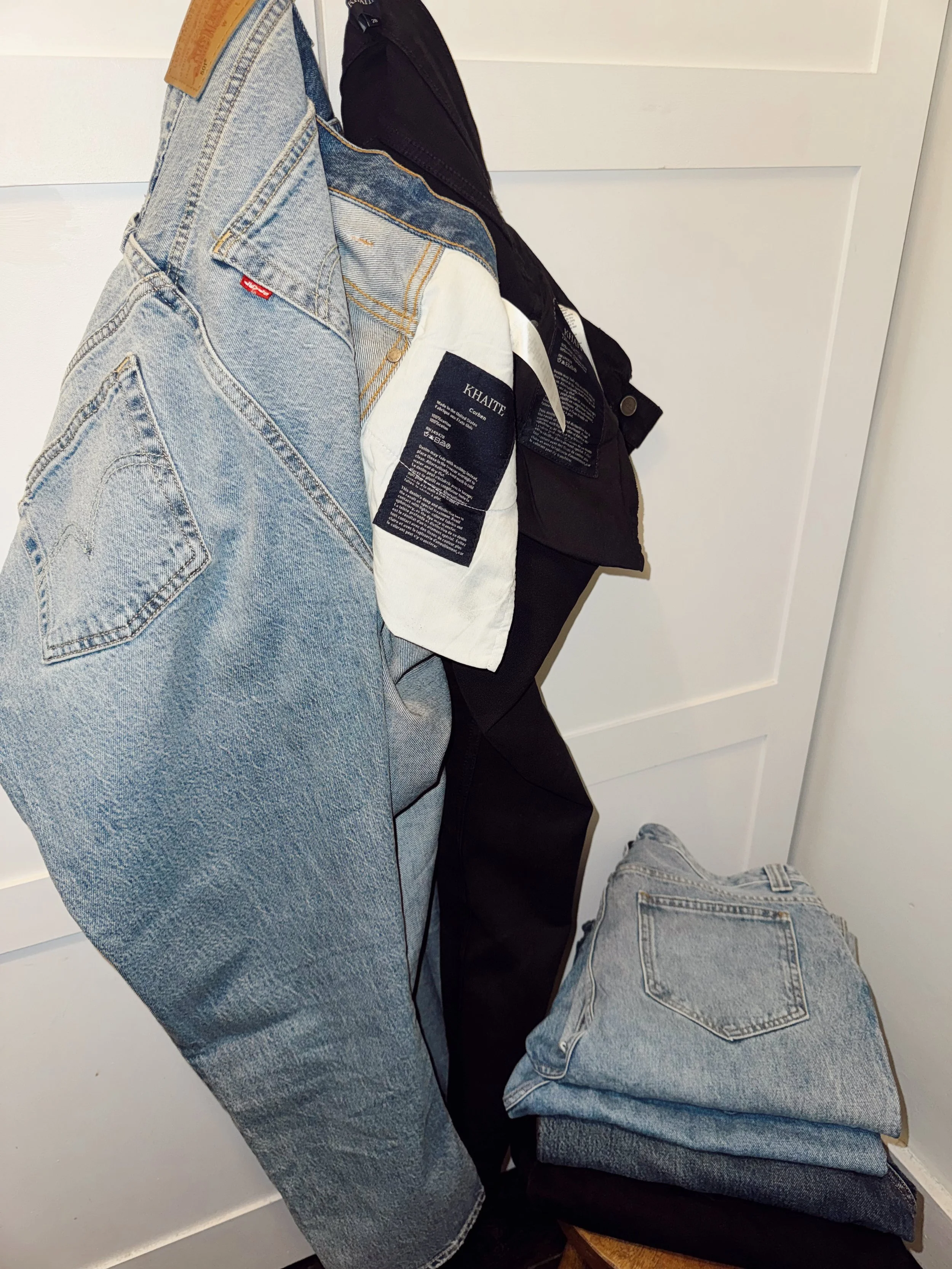
Dreamy denim cuts I live in: Levi’s 501 90s; Khaite Corben and Vivian jeans; Agolde pinch waist 90s; Goldsign low slung cropped
But something shifted around 12yrs ago: I bought a pair of Goldsign jeans in a Net-a-Porter sale and they fit me angelically. They actually enhanced my whole outfit, how I felt in my body, how I held myself. And that was it. Nothing is more gratifying than finding the pair of jeans which operate like style armour, provide you with the strongest sense of self and body confidence. So in typical fashion, I bought that particular style in seven other washes. And Goldsign became my go-to brand. Nothing is more simplifying than finding your standard size in a denim brand. My loyalty and exclusivity awarded to Goldsign overnight.
This is contrary, and aptly on brand with my own complexity, but as someone who adores fashion, style, design, I’m actually unsentimental towards my clothes. I love their beauty, how I feel wearing them, but the individual items aren’t actually my whole personality, that’s why my style is infinitely more abstract than a tangible article. Jeans however, jeans always have a story because we live our lives in them, our raucous, messy lives. Pre-covid working for the UK’s central government, jeans were occasion-wear (casual Fridays only), and the same pair lived 10 different lives over the space of 10yrs while also signalling my strongest style indicators; the most effortless version of myself which is intrinsically the most confident version of myself.
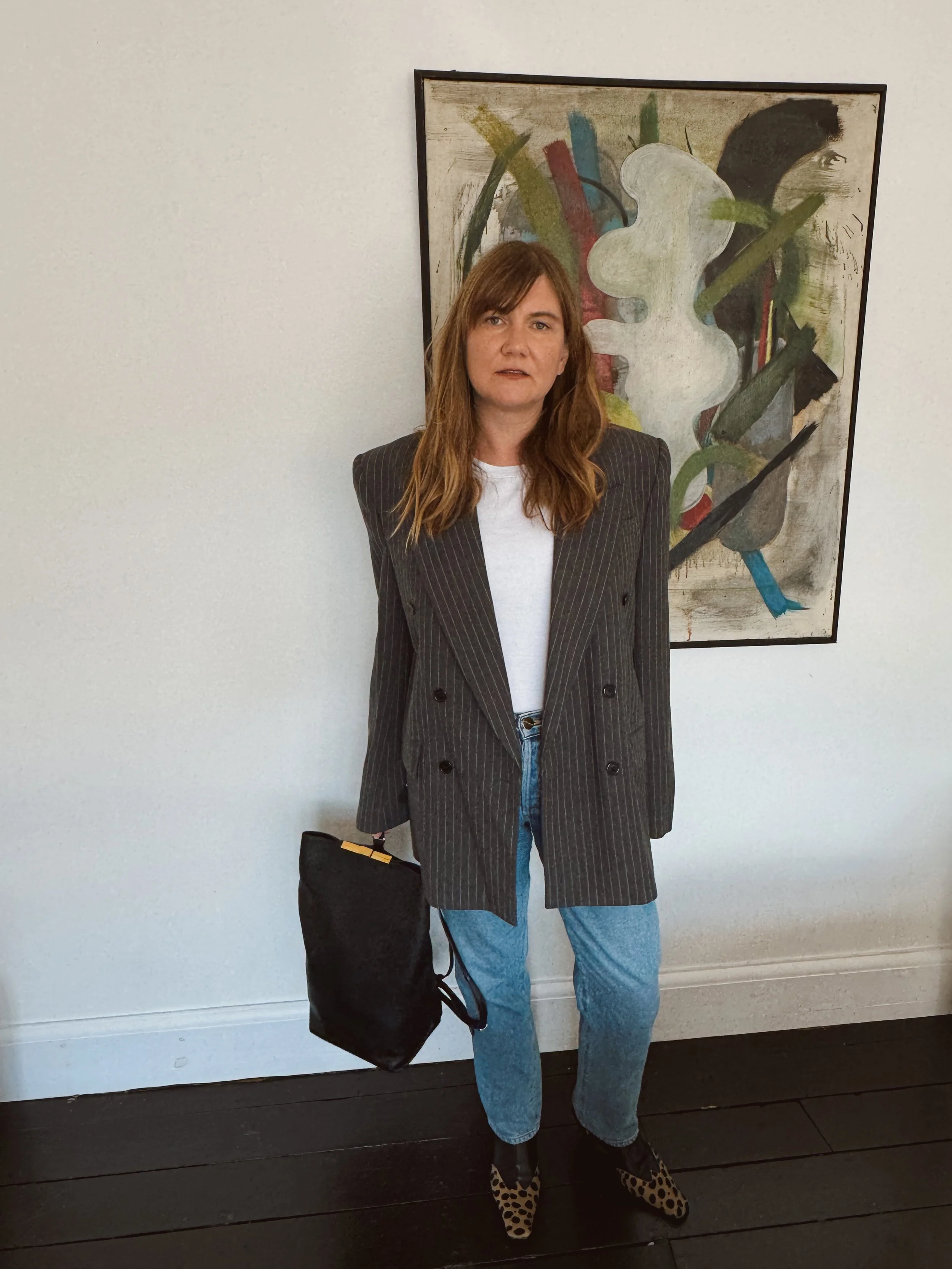
Wearing: Goldsign 90s straight jeans; Khaite bag and boots; Saint Laurent blazer; H&M t-shirt
Postpartum in 2022, I experienced an inflection point. I remember the satisfaction of fitting back into my regular denim after 3months, but overall my body shape had changed and I wanted jeans to be far more polished, far more tailored, behave like corsetry. This possibly was to compensate or to mask the exhaustion, a new body I was navigating, and my evolved sense of self now as a mum. I needed jeans to help tidy me up while still appearing effortless, foundational and elevated.
I have been a longtime Khaite fan: admiring from afar while also having my own curation of beautiful pieces acquired over the past 10yrs. I love the strength, romanticism, modernism and sensuality of the brand. Cate Holstein, Khaite’s founder and creative director knows exactly the woman she’s designing for, who that woman wants to become, how that woman behaves. She also understands the complexity of being a woman, our variable roles each day, Cate’s a mum too. The cuts and silhouettes are impeccable, precisely my style. The fabrics are ultra-premium, luscious, exceptional. And Khaite’s denim cuts and Japanese denim fabrication, delicious.
Looking at my Khaite purchase history, it’s a bit odd to have graduated from expensive cashmere jumpers and blazers to denim. Denim should really have been the gateway into the brand, clearly I live by my own rules. But since 2022, Khaite has nearly exclusively made up all my denim purchases, and accounts for 75% of the denim I’ve worn over the past 4yrs (according to my Indyx). The shapes themselves are rigid, their weight quite heavy, but the fabric is soft, almost fluid on the skin. Nothing makes me feel more like myself than a pair of Khaite jeans.
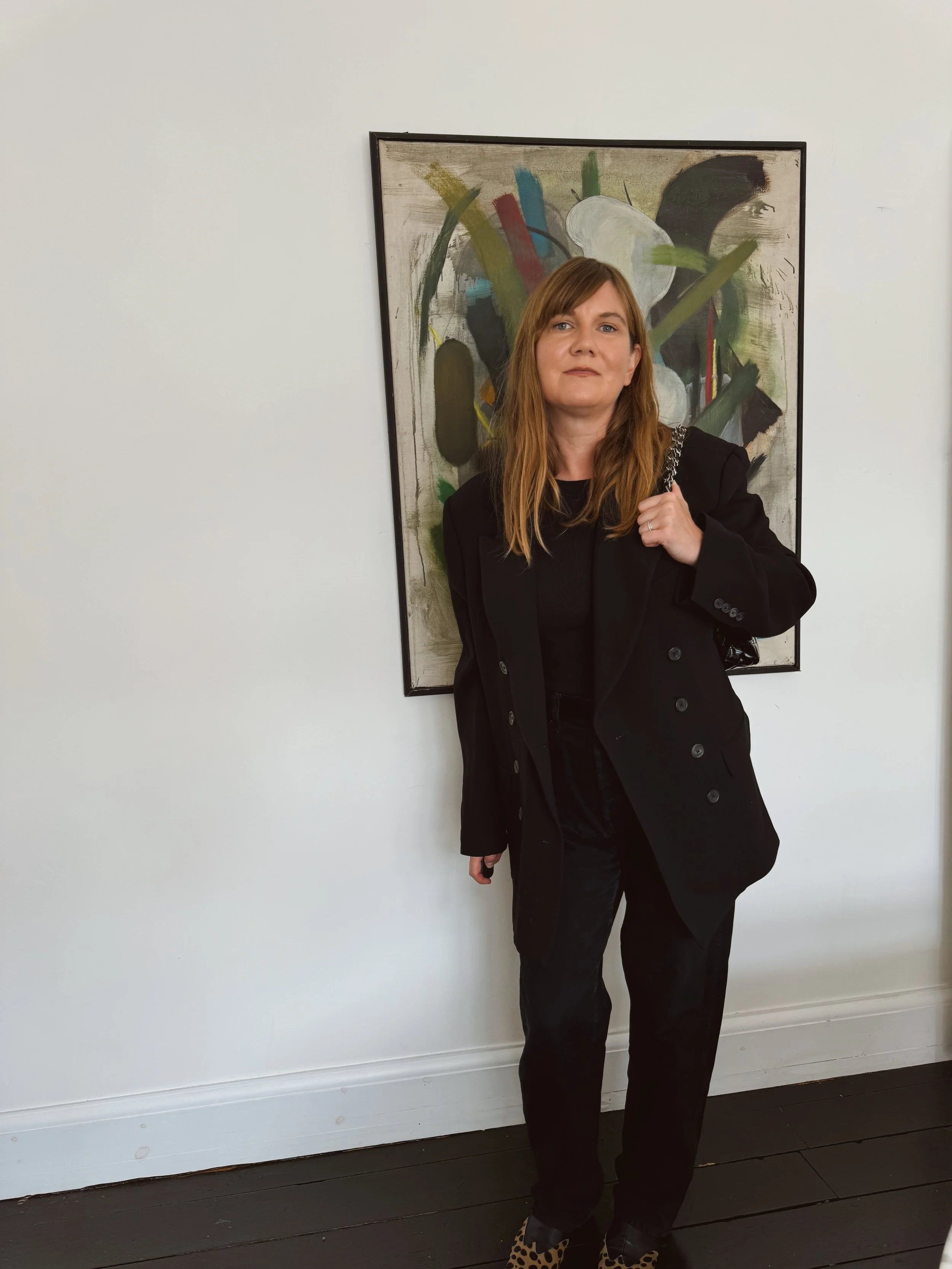
Wearing: Khaite jeans, boots and blazer; Chanel bag; Toteme t-shirt
But here’s the heartbreaking truth: this year I’ve lost weight and toned up, and now the majority of my jeans are too big, they’re bordering on sloppy. Yet another inflection point for my body. It’s a presumably good problem to have right? Not strictly.
As mentioned, I’ve anectdottaly noticed a sharp rise in the price of premium denim over the past 2yrs so I was eager to do a broader scan across designer and premium denim brands. Is this systemic, and if so what are the drivers were: pricing architecture or macroeconomic forces? As I’m buying Khaite jeans, I assumed it was macroeconomic: US tariffs, UK inflation and a weaker Pound Sterling. But digging deeper into the available data, the macro forces only account for very little of the sharp price increase since Khaite’s denim first hit retailers in 2022. Khaite’s Danielle jeans rose 48% in the US from $420 to $620 between 2022 and 2026; and across the brand’s wider Net-a-Porter denim range, UK prices rose a comparable 44% over the same period1.
I ran the comparison between other heritage luxury brands: Saint Laurent and Gucci. I used price ranges across each brand’s denim styles in 2022 and 2026 respectively (or as much as I could confidently find from 2022)1. The indicative analysis shows a similar picture: the price ranges have sharply risen at a much higher rate than the UK’s inflation at 18% during the same period2.
Matthieu Blazy’s Chanel is in a league of its own given its scarcity, emotional register and innovative new designs, all meaning Chanel’s denim will persistently be sought after irrespective of price. But for completeness, the Metiers d’art 2026 turnlock jeans retail for £2,000. Not strictly comparable but Chanel’s denim offerings started at approx. £1,100 in 2022, though styles were more embellished then making this comparison not a perfect like for like1.
Now comparatively, premium denim brands such as Agolde, Citizens of Humanity, Re/Done and Levis’ have barely moved in nominal US dollar prices over the same period. Agolde’s 90’s Pinch Waist has held at $198 since 2022, Re/Done’s High Rise Loose has crept from $255 to $275. With US inflation at more than 20% over the past 5yrs, that’s effectively a price cut in real terms. It’s a similar picture here in the UK, though these American brands are typically priced higher here than in the States. A K- shaped economy for our denim.
Net-a-Porter currently has 45 pairs of Khaite jeans for same, costing between £450-£660. Even the entry point denim sits well above where the brand’s denim started. The pair of jeans I adore most are £550. A pair of Levi’s I bought last week were £120. Levi’s: the inventor of denim, the emblem of cool, 90s straight leg cuts enduring the test of time, the most democratic yet politicised throughout its history brand. I’m grappling with luxury’s perceived value here because there are so many high-quality, expertly cut, heritage and emotionally-pulling alternatives.
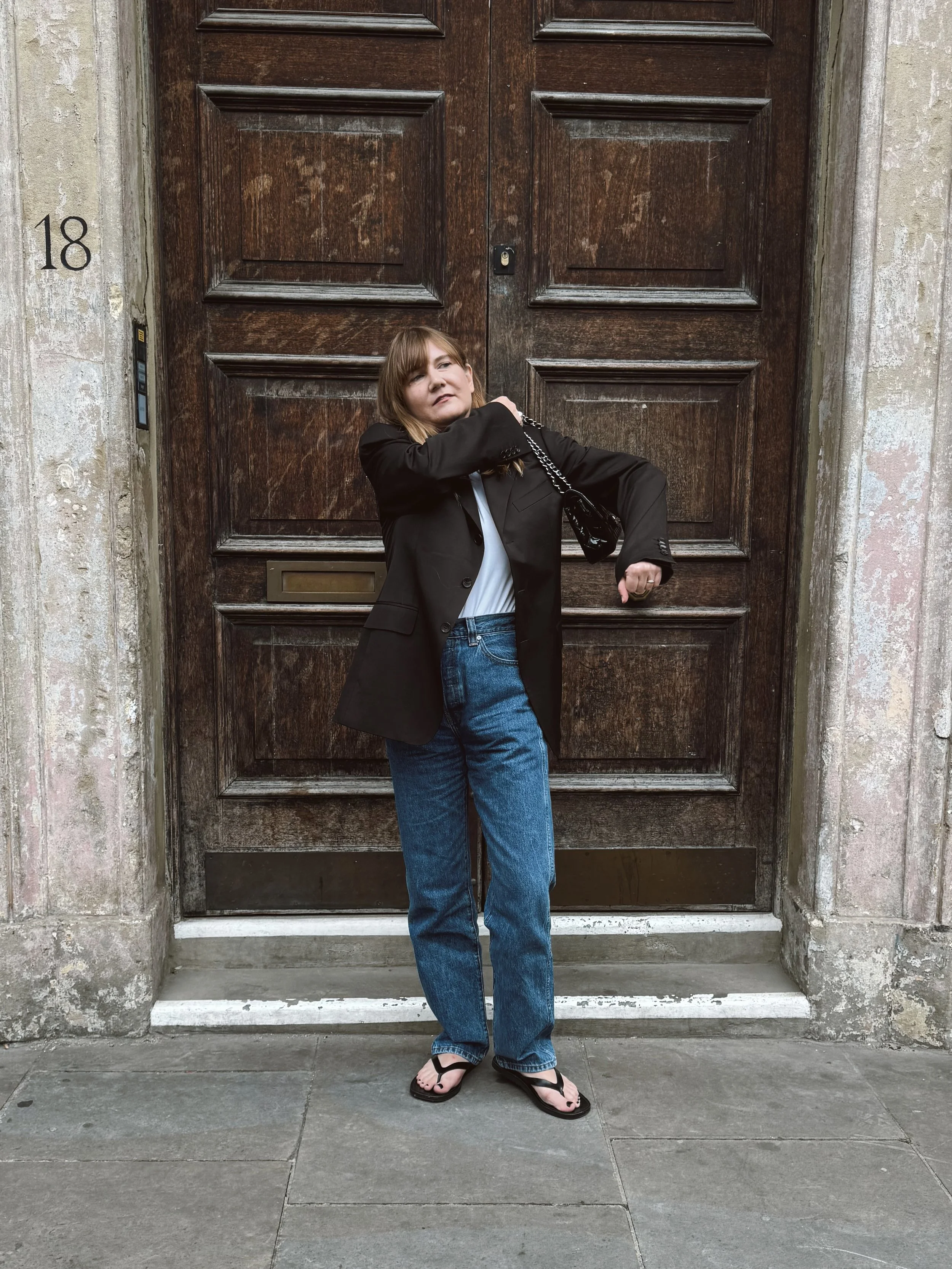
Wearing: Khaite jeans; Gucci blazer; Chanel bag; H&M t-shirt; The Row sandals
I remember in the early 2010s when handbags started costing more than £2,000 and the psychological response that manifested. In essence any luxury premium bag priced lower than £2,000 felt like exceptionally good value. And I remember when luxury shoes eked over £1,000, a threshold I didn’t feel ready to cross at the time given shoes’ wear and tear increasingly lowers their beauty and utility to a theoretical and practical point of worthlessness. That threshold has now been crossed too many times to count, in huge part thanks to Chanel and The Row. The most convincing argument I can make is the huge value I’ve derived from them: not financial, but joy, cost per wear, comfort, their ease and simplicity to elevate my most foundational style codes: blazer, white t-shirt and denim. Not to mention that especially The Row, the quality, materials and craftsmanship are exceptional.
The stories our jeans tell, the lives we lead in them. Their politics and economics. Is £500+ denim the next threshold I’ll cross? Or will I resort back to one of my founding style philosophies that denim doesn’t need to be expensive to be premium as long as the conditions I require are met in alternativies? Or can both co-exist as I navigate a denim edit which works for my body, my taste, my wants and my wardrobe trade-offs.
Next week, I’ll set out my Denim Edit methodology, a step by step guide to help you navigate and reimagine your wardrobe’s most functional, foundational and personal style indicator.
In the meantime, tell me, what’s the most you’d ever pay for a pair of jeans?
References
1 Indicative pricing methodology:
Indicative pricing methodology: The 2022-2026 price ranges are intended to illustrate how the price architecture of premium and luxury denim has shifted, rather than provide a like-for-like analysis. 2022 prices are based on archived retailer listings, fashion publications and historical product records; current prices are based primarily on brand and luxury-retailer listings. Individual styles, washes and embellishments vary, so the ranges should be read as indicative rather than as a formal price index.
2 UK inflation: ONS consumer prices index, all items: January 2022-August 2026.
